


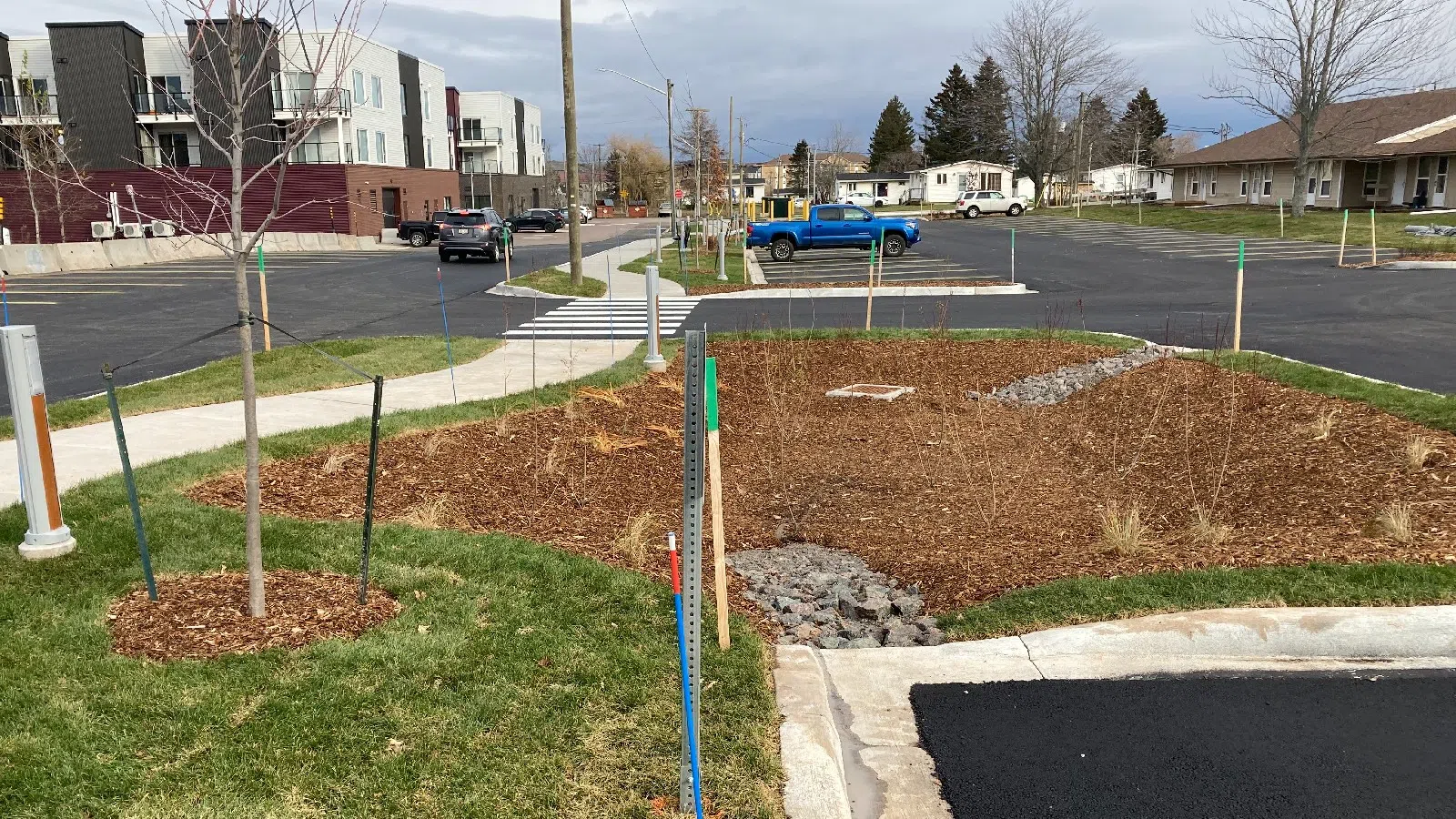
Dieppe has introduced new updates to its tree bylaw, allowing developers to incorporate alternative green infrastructure projects on their sites when planting trees isn’t feasible.
Under the original 2023 bylaw, developers were required to plant a certain number of trees or pay a fee if their site couldn’t accommodate them.
Alexandre Truchon-Savard, Dieppe’s director of environmental management, explained that the updated policy now gives developers more flexibility.
“Rather than collecting that cash-in lieu, I think developers would like to see that money stay within the site,” Truchon-Savard said.
“What is in the bylaw is that if you bring an added value project to an equal or superior value of that cash-in lieu, and you can show it on your plan with the breakdown of the costs, then we would allow that to be done instead of the plantation.”
The alternatives include measures such as green roofs, vegetated bioswales, or naturalized ponds, which help manage stormwater while improving urban biodiversity.
Truchon-Savard said council members were well-received by these ideas during discussions.
To ensure accountability, developers must submit detailed plans and provide a deposit, which will be refunded once the city verifies the project’s completion.
Truchon-Savard added that Dieppe is collaborating with the Environmental Network of New Brunswick to track the long-term value of these alternatives.
“Toronto has brought forward a similar policy for a minimum of a green roof for every new building in the city,” he said.
“We’re going to look into their policies and see how they were able to put numbers on it and the impact that it has on these projects.”
The bylaw reflects Dieppe’s commitment to balancing urban development with environmental preservation.
While it will take years to fully realize the impact of these measures, Truchon-Savard is optimistic about their potential to transform Dieppe into a more sustainable city.